
Mattresses are the single most awkward item in household waste. Bulky, heavy, awkward to carry, banned from most curbside collection, expensive to landfill, and — after a certain number of years — something nobody wants to touch. Here are the six realistic routes to getting rid of one in Minnesota and the surrounding region, with the true cost and effort of each.
Why mattresses are treated differently
It is worth understanding the reason, because it explains every rule and fee that follows.
A mattress is mostly air. It occupies enormous landfill volume relative to its weight, which matters because landfill cells are sold by space as well as by ton. It compresses badly, springing back after a compactor passes and creating voids that undermine cell stability. And a conventional innerspring mattress contains a steel grid that fouls compaction equipment — a genuine operational problem at a transfer station rather than a theoretical one.
Set against that, a mattress is highly recyclable when taken apart. Steel springs go to scrap. Foam is shredded into carpet underlay. Cotton and fibre become industrial felt. Timber from the frame goes to biomass. Between 75 and 90 percent of a standard innerspring mattress is recoverable — if a dismantler exists within economic reach, which is the entire crux of the matter.
The rules in Minnesota and Wisconsin
There is no statewide mattress-specific disposal ban in Minnesota comparable to the state's long-standing bans on electronics and appliances in landfill. What there is instead is a patchwork of local rules that produces much the same practical effect.
- Curbside collection. Most municipal and contracted haulers in this region exclude mattresses from standard collection, or accept them only as a booked bulky-item pickup with a separate fee.
- Transfer stations. Generally accept mattresses, generally with a per-unit surcharge that reflects the volume and equipment problem.
- Bulky waste days. Several communities run periodic collection events that include mattresses. They are the cheapest legitimate route by a wide margin — the constraint is that they happen on a fixed date and yours may be seven months away.
- Illegal dumping. Prosecuted, and roadside mattresses are one of the more traceable forms of it, since labels and delivery records frequently survive the weather.
Wisconsin and the western Upper Peninsula follow broadly similar patterns, with the same practical outcome: the mattress needs a booked route, not a curb.
Check your community first
Before paying anybody, check whether your city or county runs a bulky waste collection event, and when. If one falls within a few weeks and you have somewhere to store the mattress meanwhile, it is almost always the cheapest legal option available to you.
Six routes, compared honestly
| Route | Typical cost | Effort | Best when |
|---|---|---|---|
| Municipal bulky waste day | Free – $25 | High — you transport it | An event falls soon and you have a vehicle |
| Transfer station drop-off | $20 – $50 per unit | High — you transport it | You own a truck or trailer already |
| Retailer haul-away | $0 – $150 | Minimal | You are buying a replacement anyway |
| Donation | Free | Medium — you deliver it | The mattress is genuinely near-new |
| Dismantle it yourself | Free – $20 | Very high — 2 to 3 hours | You have tools, time and a scrap yard nearby |
| Full-service removal | $200 flat, $150 with a second item | None | Stairs, no vehicle, or no free weekend |
Retailer haul-away: read the conditions
If you are buying a replacement, ask about haul-away before you buy rather than after. Most large retailers offer it, but the conditions vary far more than the advertising suggests, and three of them catch people out regularly.
First, haul-away is usually one-for-one — they take the old mattress only if it is the same category as the one being delivered, so a mattress does not buy you removal of a box spring as well. Second, many retailers will refuse a mattress that is soiled, wet, or shows evidence of infestation, and the delivery crew makes that judgement on your doorstep with no appeal. Third, "free haul-away" is frequently bundled into a delivery fee that is itself not free.
Donation: a narrower window than people expect
The instinct to donate is a good one and it is worth trying, but the acceptance criteria are stricter than most people anticipate — and reasonably so. Charities cannot pass on a mattress that would create a health issue for the recipient.
In practice, a mattress needs to be free of stains, tears and odour, free of any sign of pest activity, structurally sound with no sagging or protruding springs, and generally under about ten years old. Many organisations will not accept used mattresses at all, and several states restrict resale of used bedding outright unless it has been professionally sanitised and labelled.
Call first. Do not load it into the car on the assumption it will be accepted, because a rejected donation just means you have transported a mattress twice.
Dismantling it yourself
Entirely possible, occasionally worth it, and consistently underestimated. Budget two to three hours for a standard innerspring, and expect it to be tedious rather than difficult.
You need a utility knife, heavy wire cutters or bolt cutters, pliers, a pry bar for the frame, and thick gloves — the spring steel is sharp and it will find any gap in your protection. Cut the fabric around the perimeter, peel back the covers, remove the foam and fibre layers, cut the border wire, and separate the spring unit from the timber frame.
You end up with steel for the scrap yard, timber for biomass or firewood, and foam and fabric which — unless a textile recycler happens to be nearby — go in the bin. The steel might be worth a few dollars. The genuine benefit is avoiding the per-unit disposal surcharge, not the scrap value.
It is not worth doing for one mattress unless you enjoy that sort of thing. For four mattresses out of a rental property, the arithmetic starts to work.
Never dismantle a mattress with suspected bed bugs
Cutting it open aerosolises the problem and spreads it through the room you are working in. Seal the mattress in a purpose-made disposal bag before it leaves the bedroom, label it clearly, and tell whoever collects it. Any competent removal service would far rather know in advance — it changes how we handle the item, not whether we take it.
What removal costs with us
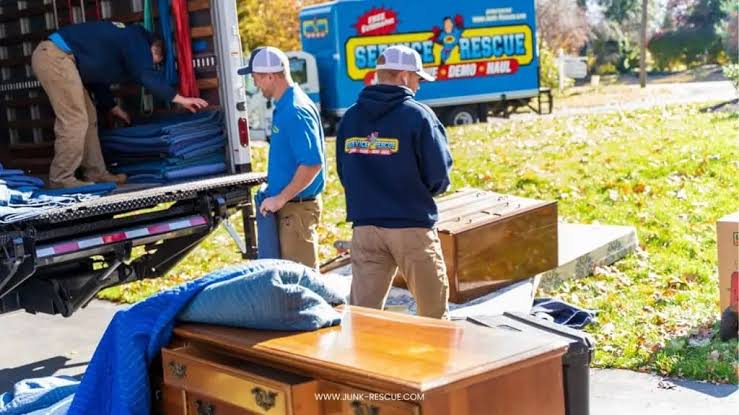
A mattress is $200 on our flat-rate list, and that figure covers collection from wherever it currently is — including a second-floor bedroom at the top of a narrow staircase — plus loading, transport, disposal and sales tax. There is nothing to add afterwards.
Two details change the arithmetic in your favour:
Bed frames are included. A standard bed frame comes with the mattress at no extra cost. The published $50 surcharge applies only where the frame includes both a headboard and a footboard, which is genuinely a larger item.
The multi-item discount is per item. Add any second item from the flat-rate list and $50 comes off every item, not just the second. A mattress plus a chest freezer is $150 + $150 = $300, not $400. If you are clearing a bedroom, add the dresser to the same visit and the effective cost of the mattress drops by a quarter.
Choosing between them
Buying a replacement? Take the retailer's haul-away, having checked the conditions first. It is the cheapest route that involves no effort from you.
Mattress nearly new? Ring two or three local organisations before assuming it cannot be donated. The window is narrow but it exists.
Own a truck and have a free morning? Transfer station drop-off is straightforwardly the cheapest cash option, and the fee is published.
Clearing multiple items, or facing stairs? Full-service removal, with everything on one visit to trigger the multi-item discount.
No vehicle, no free weekend, one mattress? The flat rate is what it is, and it is the whole cost. That is the case it exists for.
One last piece of sequencing
Order the removal for the day the new mattress arrives, not the week before. People routinely book removal early, then sleep on the floor for four days because the delivery slipped. Book both, then call us if the delivery moves — rescheduling more than 24 hours out costs nothing.
Need this handled rather than explained?
Call (218) 461-1436 or send us the details. Flat rates, sales tax included, and a firm quote on the first call for anything on the published list.